
We are veterans that have made it our goal to help other veterans, military, and their families. Life after military wasn’t what we expected. We’ve experienced it first hand. It took awhile to find our way through the haze, and we know having a community that understands the unique military experiences is crucial for building camaraderie and trust necessary to restore mental resilience. The effects of miliary trauma are not limited to the struggles of PTSD; the toll of training and conditioning in the military changes the way you think, feel, and act. It takes time and discipline to take negative thoughts captive and lead a healthier life.
87%
Studies have shown that 87% of veterans are exposed to potentially traumatic events.

<50%
Fewer than 50% of veterans in need receive any kind of mental health treatment.

60%
A combat veteran’s first marriage is 60%
more likely to end in divorce.

30x
It is estimated that veteran deaths to
suicide and overdoses
have taken more than
30 times the lives
lost in combat.

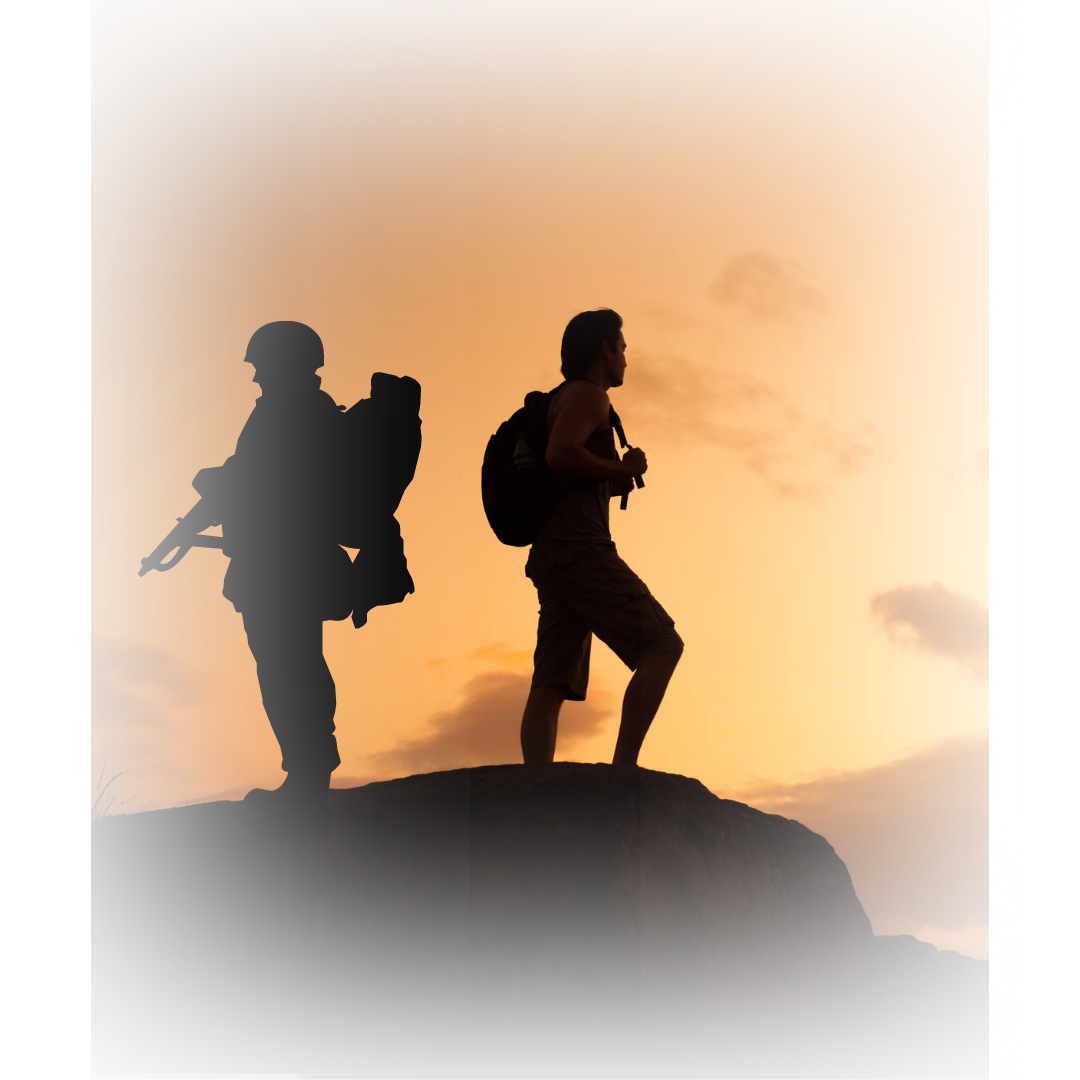
Reset to Reconnect
The familiarity of hiking struggles can help rewrite memories of military experiences, which can lead to healthier responses to everyday situations
Camaraderie
Hiking groups help establish camaraderie that is lost after the time of service.
Pushing your limits
The familiarity of pushing limits and conquering challenges can be applied in everyday mental battles.
Brain Health
Studies have shown that aerobic exercise induces neurogenesis and increases a brain protein that helps neurons grow and survive.
Getting Outdoors
In studies done on effective therapies for Veterans with PTSD, NATURE CONTACT has been shown to increase subjective well-being decrease stress, anxiety, depression and negative affect promote adaptive shifts in emotion regulation.
A hike is the perfect picture of what it means to walk through life’s challenges. Whether you’re facing difficulties in marriage, finances, careers, every day mental battles, or unhealthy coping mechanisms – you have to choose to take the next step despite the pain and struggle. Once you’re down the trail, there’s no giving up or tapping out. You push through the aching muscles, you choose to keep yourself fed and hydrated, you take the breathers when you need them, and then you take the next step.
Facing Obstacles: Maybe there’s steep climbs, rough terrain, and sometimes unexpected hurdles like bad weather. In life, challenges often come in the form of unforeseen difficulties. Overcoming these obstacles requires determination and adaptability.
Pacing and Perseverance: A long, difficult hike isn’t conquered in a single stride. It requires pacing yourself, taking one step at a time, and pushing forward even when you’re tired. Big goals and challenges need a plan with steady effort and persistence, even when progress seems slow.
Support and Encouragement: During a hike, having companions can make all the difference. They can offer encouragement, share the load, and provide help when needed. The camaraderie support of friends, family, and community is absolutely invaluable in overcoming difficulties.
The Reward of Achievement: Reaching the summit of a difficult hike is a rewarding feeling like no other. The sense of accomplishment, the breathtaking view, and the realization that you conquered the challenge make the journey worthwhile. Imagine the feeling when you see personal growth, a greater sense of self-confidence, and the satisfaction of knowing you’ve achieved something significant.
Learning from the Journey: Each hike teaches lessons—about your limits, your strengths, and how to navigate future trails. When you know better, you do better. There’s valuable lessons in the struggle that shape who you are and prepare you to respond better in future difficulties.
 Mission:Hike